Wedge wire screens in oil, gas and petrochemical processing
Slotted internals for media retention, process-flow collection and protection against escaped media or solids. The screen duty, fluid chemistry and mechanical loading define the specification for each installation.

Process duties and selection approach
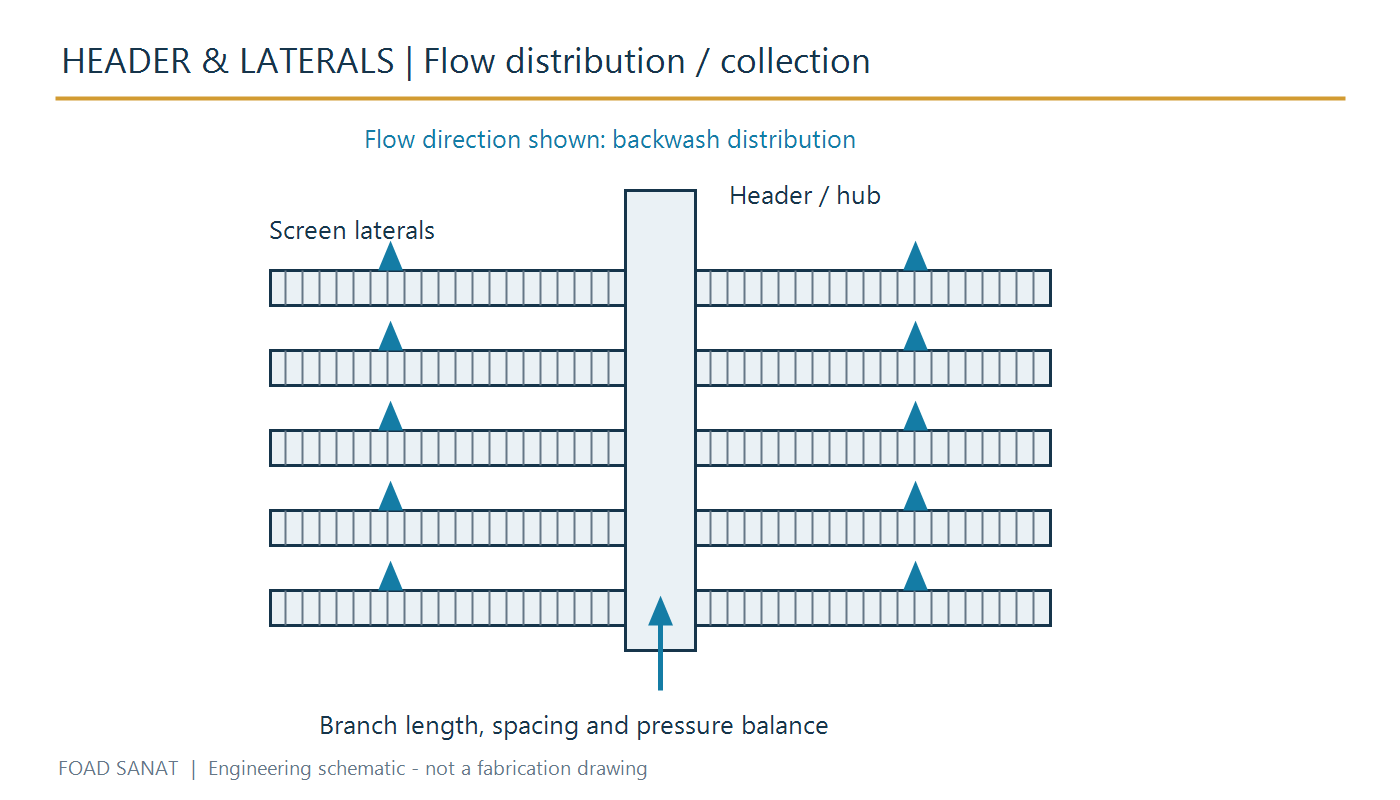
Media support grids and screen cylinders retain a specified bed while allowing process fluid to pass. Header and lateral assemblies collect or distribute the flow. A resin trap installed downstream retains media that has escaped another unit; its role differs from supporting the bed itself.
Screen internals and pressure-containing equipment have different design responsibilities. A slotted component is not assigned the vessel’s pressure rating merely because it sits inside that vessel. Bed weight, differential pressure, flow reversal and support loads are reviewed with the actual assembly drawing and service conditions.
Technical information for the application
| Screen duty | Bed support, flow collection/distribution, escaped-media retention or process straining; identify the expected passing and retained material. |
|---|---|
| Fluid and temperature | Composition, phase, operating and design temperatures, corrosive species and cleaning chemicals. |
| Pressure and loading | Operating and design conditions, differential pressure in service and cleaning, bed weight and any permitted uplift or reverse loading. |
| Media and openings | Media type and grading, smallest particles to retain, nominal slot and tolerance, profiles and active area. |
| Flow arrangement | Normal and peak flow, inside-to-outside or reverse direction, distribution layout and allowable pressure drop. |
| Geometry and supports | Vessel internals drawing, support ring or beams, unsupported spans, branch positions and manway clearance. |
| Connections and materials | Flanges, threads, seals, locking details, alloy compatibility and access for removal. |
| Supply and inspection | Internal element, framed assembly or complete housed equipment; specify material records, dimensional, slot and weld inspection. |
Technical arrangement
Equipment photographs


Installation, inspection and cleaning
- Check the assembled flow path and every media-retaining joint, not only the nominal slots. Loose connections or panel gaps can bypass the screen.
- Verify branch positions and support contact against the drawing before loading the bed.
- Use the defined service and cleaning sequence; confirm permitted reverse flow and loading before changing a cleaning method.
- During shutdown record corrosion, deformation, loose joints, enlarged slots and local wear. Match replacement parts to the original hydraulic and mechanical duty.
Relevant filter equipment
Request a technical review
Send the process description, fluid chemistry, temperatures and pressures, media grading and bed depth, service and cleaning flows, support and assembly drawings, and the required supply boundary.